

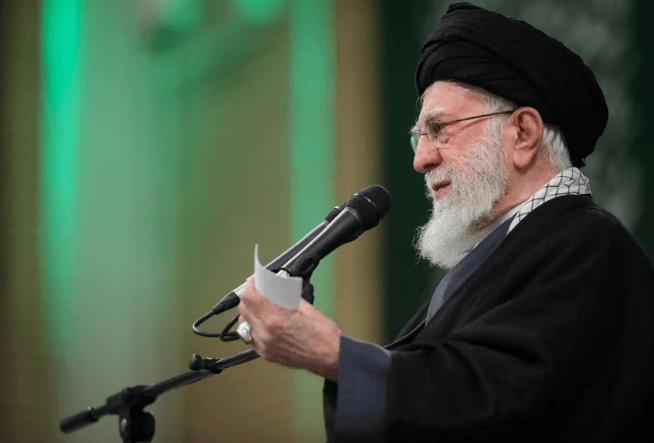
Tehran — In a rare and strongly worded televised address on January 17, Iran’s Supreme Leader Ayatollah Ali Khamenei accused former U.S. President Donald Trump of being a “criminal” for supporting protests that have erupted across Iran and led to a heavy security crackdown.
Khamenei’s comments mark a significant escalation in rhetoric at a moment when Iran is dealing with some of its largest demonstrations in years, and when domestic unrest has become deeply intertwined with global politics.
Protests, Casualties, and Turmoil
The protests, which began as economic grievances over rising living costs and government policies, quickly evolved into widespread calls for political change. Official figures from within Iran are limited, but independent human rights groups estimate that more than 3,000 people have been killed during the government’s response to the demonstrations.
In his speech, Khamenei acknowledged that “several thousand” people have died — one of the most open admissions by Iranian leadership about the scale of the crackdown.
Observers say that the government’s acknowledgment reflects the immense pressure Tehran faces, both domestically and internationally, as public anger continues and global scrutiny intensifies.
Blaming Trump and Calling for Accountability
The Supreme Leader placed significant blame on former U.S. President Donald Trump, accusing him of stoking unrest and supporting demonstrators. Khamenei claimed that Trump’s words and actions encouraged the protests and contributed to the violence, framing the demonstrations as part of a foreign-backed agenda to destabilize Iran.
“The United States and its agents have encouraged chaos and violence,” Khamenei said. “Those who use protests as tools must be held accountable for the deaths that have resulted.”
Trump, who has maintained a vocal stance against the Islamic Republic, responded with criticism of Iran’s leadership, calling for political reform and emphasizing support for the Iranian people.
Political Tensions and International Relations
The exchange of accusations highlights how domestic unrest in Iran has rapidly become entangled with geopolitical tensions. The United States and Iran have long-standing adversarial relations, and the current conflict adds a new layer to that dynamic.
Experts say that Iran’s leadership often uses external blame to deflect internal criticism and frame protests as influenced or orchestrated by foreign powers. Whether or not external support is present, this narrative underscores Tehran’s resistance to acknowledging the full extent of domestic discontent.
Iran’s Crackdown and Global Reaction
The Iranian government has restricted internet access and deployed security forces in major cities to quell protests. These measures have drawn widespread international concern, with human rights organizations calling on Tehran to protect civilians and respect basic rights.
Across the world, Iranians abroad have staged supportive demonstrations, drawing attention to the turmoil back home and urging global leaders to advocate for peace and fundamental freedoms.
What This Means Moving Forward
The situation remains volatile. With both internal pressures and external accusations increasing, many analysts believe that Iran is at a critical political juncture. The Supreme Leader’s comments reflect a leadership under strain — resorting to international blame while trying to maintain control at home.
As protests continue, the world watches closely, and ordinary Iranians continue to bear the consequences of political conflict.