

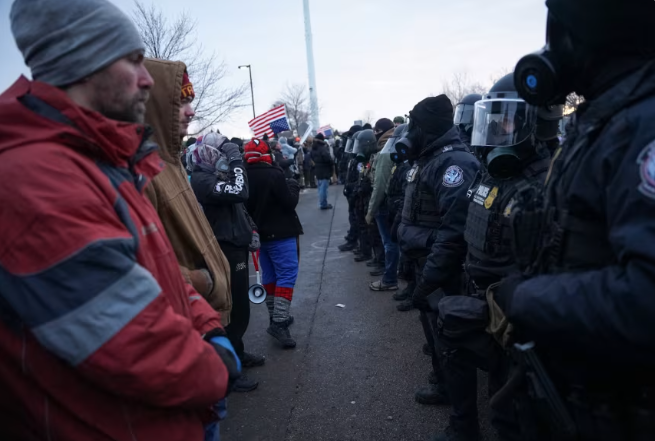
Minneapolis, Minnesota; Tensions remain high in Minnesota as protests against federal immigration enforcement continue across the Twin Cities, prompting Governor Tim Walz to mobilize the Minnesota National Guard to support local authorities in maintaining public safety.
The protests escalated following two recent incidents involving U.S. Immigration and Customs Enforcement (ICE) agents. On January 7, Renee Nicole Good, a 37-year-old Minnesota mother, was fatally shot by an ICE officer, sparking widespread outrage and daily demonstrations in Minneapolis and St. Paul.
Guard on Standby Not Deployed to Streets
Governor Walz’s office confirmed that the National Guard has been mobilized and staged but not yet deployed on city streets. According to a statement from the Minnesota Department of Public Safety, Guard members have been placed on standby to support local law enforcement and emergency management agencies if needed.
As CNN reported, Guard units are “staged and ready to respond,” primarily to provide traffic support, protect life, preserve property, and assist peaceful assemblies,” according to Minnesota National Guard spokesperson Army Maj. Andrea Tsuchiya.
This means the National Guard is prepared to help in situations where additional coordination might be required – such as directing traffic around large demonstration areas or aiding in logistics – but they are not currently patrolling protest sites.
Protests Trigger Counter-Demonstrations
Protests have continued daily, with crowds of demonstrators opposing federal ICE operations and others staging counter-rallies. One such event saw hundreds of counterprotesters overwhelm a small gathering of conservative activists who came to support the immigration crackdown, underscoring the deep divisions within the community.
Many protesters remain critical of the aggressive tactics used by federal agencies, accusing ICE of excessive force and disruption of everyday life in Minneapolis. Local leaders and civil rights groups have raised concerns about civil liberties and the treatment of peaceful assemblies.
Federal and State Tensions
The federal government has sent thousands of immigration enforcement officers to the region in what it calls a crackdown on criminal activity and fraud. Local and state authorities, however, argue the operation has caused harm and instability, leading to legal challenges and increased scrutiny. A federal judge has recently placed restrictions on some immigration enforcement tactics in the state after civil rights groups argued they violated protesters’ rights.
The situation continues to develop as community members, activists, civil liberties groups, local officials, and federal agents all push for their interests and interpretations of safety and justice.
What This Means for Minnesota
- National Guard presence signals the seriousness of the ongoing unrest and the need for additional support, even if troops are not currently on protest lines.
- Protests and counter-protests reflect a deeply divided public response to federal immigration policy and enforcement practices.
- Legal actions and restrictions on enforcement tactics show growing legal and civil rights involvement in the conflict.
As the situation continues to evolve, Minnesotans and observers across the country are watching to see how authorities balance security, civil liberties, and community concerns in one of the most volatile public demonstrations in recent years.