
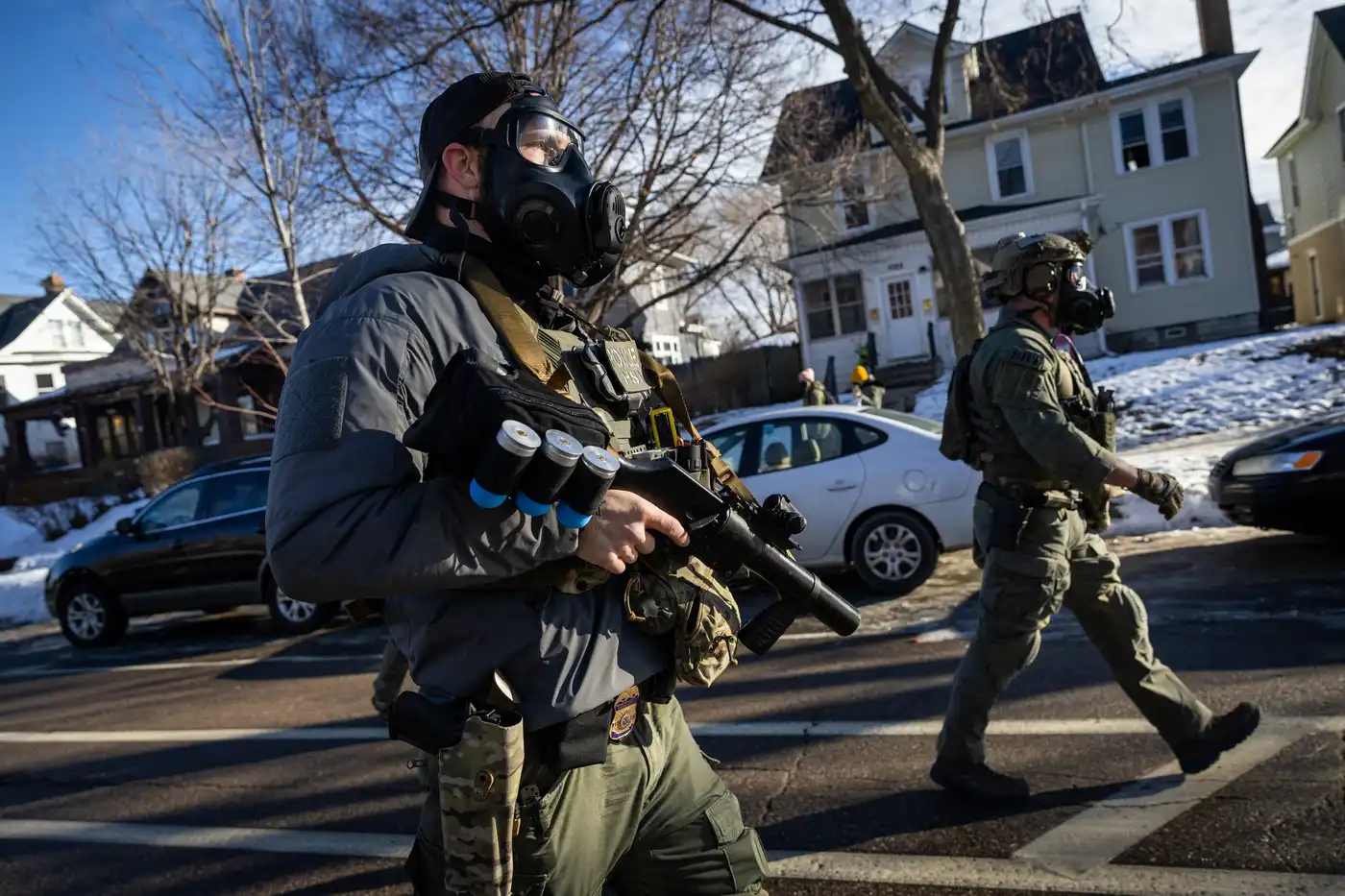
Minneapolis, MN — A recent analysis of the U.S. Immigration and Customs Enforcement (ICE) enforcement campaign in Minnesota has raised questions about how federal authorities are reporting their operations — especially in terms of arrests tied to the so-called Operation Metro Surge.
According to a review of ICE’s public list of high-profile cases in Minnesota, several individuals that the Department of Homeland Security (DHS) touted as recent immigration arrests were in fact already in state prison custody before ICE removed them, raising concerns about transparency and public messaging.
Federal Claims vs. State Records
In mid-January, DHS shared a list of people it described as the “worst of the worst” criminal immigrants arrested in Minnesota as part of the federal immigration enforcement push. But a detailed look at records shows:
- Several individuals on the ICE list were transferred from state prison to ICE custody months before the current enforcement surge began.
- Some had been handed over to ICE under prior administrations, not caught in new federal operations.
- Others had been transferred years earlier, with dates dating back beyond 2025.
These findings suggest that ICE may be presenting old or previously recorded transfers as newly conducted arrests, potentially overstating the impact of current enforcement activity.
Why It Matters
Critics say this matters because federal agencies are using these figures to justify the intensity of their enforcement campaign in Minnesota, asserting that local policies — including so-called sanctuary approaches — are allowing “criminal illegal aliens” to remain free. DHS leaders have repeatedly cited criminal histories to support the operation, which includes increased deportations and presence of federal agents in the Twin Cities.
However, state officials have pushed back, noting that Minnesota’s Department of Corrections records show cooperation with ICE in identified cases — and that DHS’s published numbers don’t match the actual custody and transfer data.
Broader Controversy Over Enforcement Operations
This issue comes amid intense debate in Minnesota over ICE activity, which has already sparked large protests and concerns about civil liberties. Demonstrations erupted after the killing of Renée Good, a Minnesota resident, by an ICE officer during an enforcement action — an incident that drew national attention and heightened tensions between federal and local officials.
At the same time:
- Local and state leaders have criticized federal tactics as overly aggressive and potentially unconstitutional.
- A federal judge in Minneapolis issued restrictions on federal agents’ abilities to arrest peaceful protesters, citing First Amendment concerns.
- Minnesota corrections officials are disputing federal claims about the number of non-citizens in prison custody and how many were previously released.
Public Reaction and Community Impact
The debate over how ICE characterizes its operations has produced mixed responses:
- Supporters of aggressive enforcement argue that highlighting serious criminals removed from communities underscores the need for strong federal actions.
- Opponents argue that overstating or misrepresenting data erodes trust, misleads the public, and fuels unnecessary fear — especially among immigrant and minority communities.
For many residents in Minnesota’s Somali community — already worried about widespread enforcement actions — the disclosure that some “new arrests” were not actually recent adds to concerns about misuse of data and rhetoric. Balancing public safety, accurate reporting, and civil liberties remains a central challenge as the situation evolves.
Looking Ahead
As immigration enforcement operations continue in Minnesota and across the U.S., questions about transparency and data integrity will likely remain at the forefront of public debate. Analysts and community advocates say it’s crucial that federal and local authorities provide clear, accurate information to preserve trust and ensure that enforcement policies do not unfairly target or misrepresent vulnerable populations.