
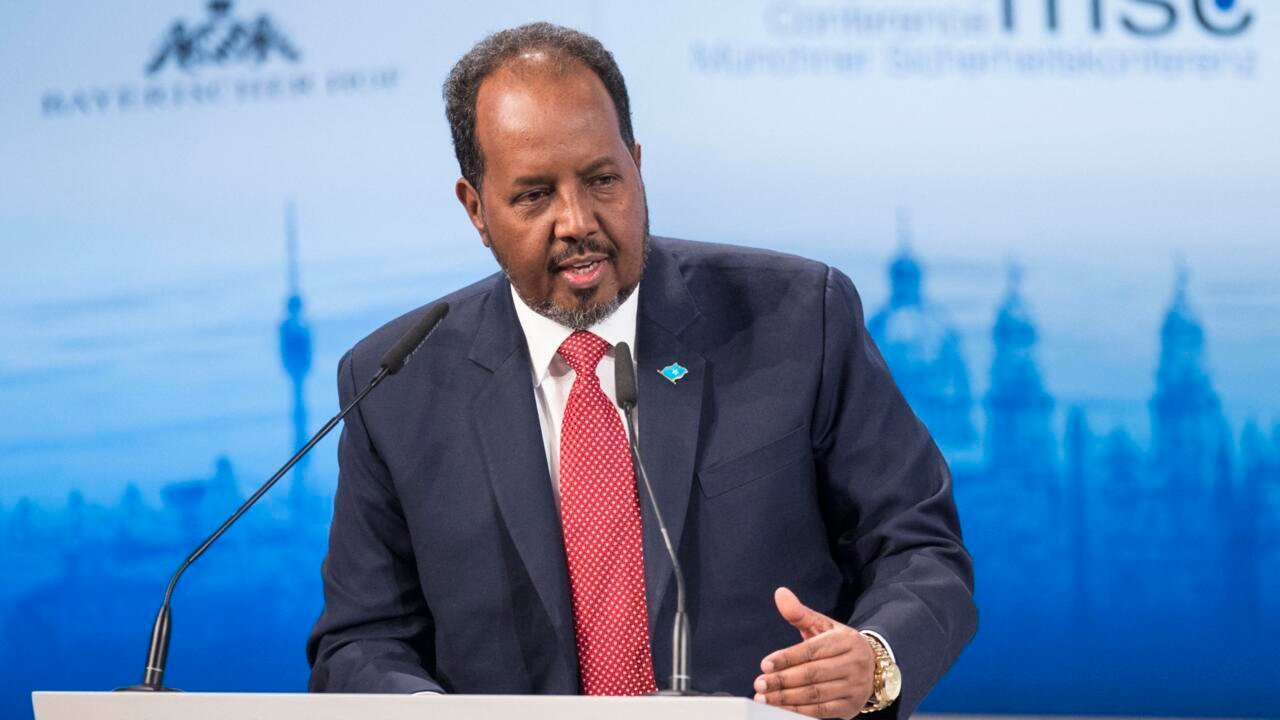
MOGADISHU — Somalia’s long-running political standoff over elections may finally be moving toward a compromise after President Hassan Sheikh Mohamud agreed to a proposal that would see elections held within seven months, according to reports.
The development follows weeks of indirect negotiations between the federal government and opposition figures, with Somalia’s international partners working to bridge deep disagreements over the country’s electoral process.
But the apparent breakthrough comes with an important caveat: the president has not clearly committed to holding the presidential vote itself within seven months.
According to Somali Guardian, Mohamud accepted part of the opposition’s demands in his latest response but altered important language concerning the role of international partners and the timing of the presidential election.
Seven months — but for which election?
The dispute centers on the wording of the proposed agreement.
Mohamud reportedly accepted that elections would take place within seven months, while retaining language referring to the “election of the federal government.”
However, he removed a specific commitment that the presidential election would take place within the same seven-month period.
That distinction could prove critical.
Opposition leaders have been demanding clarity over the election timetable and safeguards against what they fear could become an open-ended extension of the government’s mandate.
The president, meanwhile, has maintained that Somalia needs a credible electoral system capable of moving the country away from the political crises that have accompanied previous election cycles.
A crisis that has already tested Somalia
The latest negotiations come after months of political uncertainty.
Mohamud’s presidential mandate became the centre of a major dispute after opposition leaders rejected the government’s position on the extension of his tenure and questioned the constitutional basis for continuing beyond the previous election deadline.
The standoff revived memories of Somalia’s 2021 political crisis, when disagreements over delayed elections triggered armed confrontations and brought the country close to a serious constitutional breakdown.
Analysts have warned that another prolonged dispute could weaken Somalia’s federal institutions at a particularly difficult time.
The country is simultaneously fighting al-Shabaab, managing tensions between Mogadishu and federal member states and relying heavily on international partners for security and financial support.
The election system remains the bigger battle
At the heart of the disagreement is not simply the date of the election.
It is also how Somalia will vote.
Mohamud has championed a move toward direct, one-person-one-vote elections, arguing that Somalis should be able to choose their leaders directly rather than relying on the clan-based indirect system used in previous electoral cycles.
The president has argued that the indirect model has repeatedly produced political disputes and violence.
Opponents, however, have raised concerns about whether Somalia has enough time and institutional capacity to organize a nationwide direct election while the country remains affected by insecurity and political divisions.
That disagreement has made electoral reform one of the most politically sensitive issues in Somalia.
International pressure behind the talks
The latest negotiations have also highlighted the growing involvement of Somalia’s international partners.
The president reportedly changed the terminology describing their role from “mediation” to “facilitation,” a seemingly small adjustment that reflects the sensitivity surrounding foreign involvement in Somalia’s political process.
International partners have a strong interest in preventing another political crisis.
Somalia remains heavily dependent on international assistance, while its security forces are taking on greater responsibility as international military support evolves.
A contested election or prolonged constitutional dispute could distract the government from its campaign against al-Shabaab and further strain relations between Mogadishu and the federal states.
Puntland and South West remain crucial
Any agreement in Mogadishu will also have to overcome divisions between the federal government and Somalia’s powerful regional administrations.
Puntland has been among the strongest critics of the federal government’s political direction, while relations between Mogadishu and South West state have also deteriorated sharply.
Those disputes have demonstrated how difficult it will be to conduct a nationwide election without broad agreement among Somalia’s political stakeholders.
Recent fighting around Baidoa has further underscored the danger of allowing political disputes to overlap with security tensions.
A narrow window for compromise
The seven-month proposal could therefore represent an important opening — but not necessarily the end of Somalia’s election crisis.
For the agreement to hold, the government and opposition will need to settle several outstanding questions: the precise election date, the electoral system, the constitutional framework, the role of federal member states and guarantees that competing political actors will accept the eventual result.
There is also the question of trust.
Somalia has experienced repeated election delays, political confrontations and disagreements over constitutional authority. Each new deadline has therefore been greeted with both hope and skepticism.
The latest proposal offers a possible route out of the impasse.
But until the parties agree on what election will be held, when it will happen and under what rules, Somalia’s political crisis remains unresolved.
For now, the clock is running.
Seven months may have been agreed in principle. The real test will be whether Somalia’s leaders can turn those seven months into a credible path to the ballot box.