
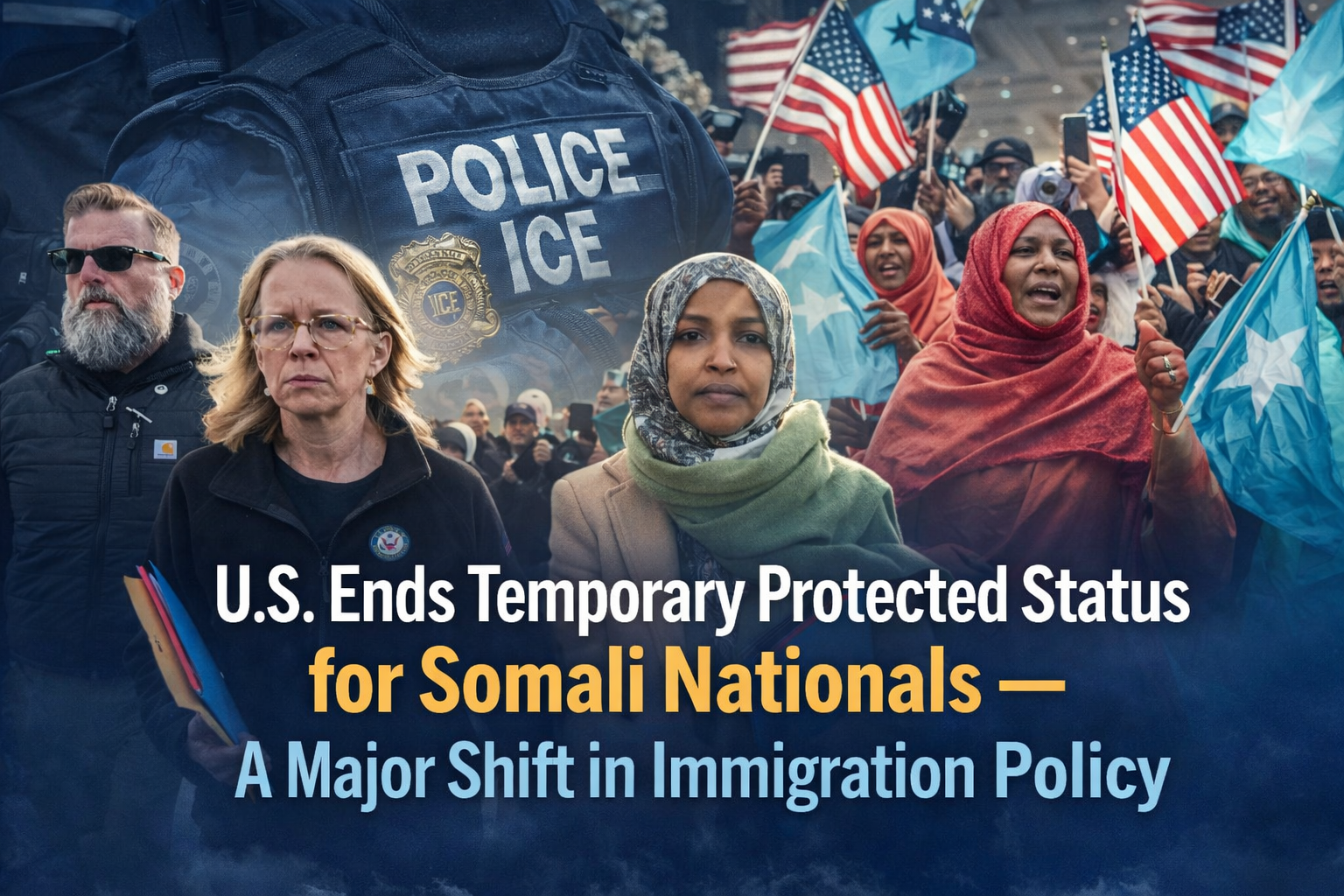
The U.S. Department of Homeland Security (DHS) has officially terminated Temporary Protected Status (TPS) for Somalia, a designation first granted in 1991 amid civil war and widespread instability. The decision, announced in mid-January, has stirred intense debate nationally and within immigrant communities — particularly in cities like Clarkston, Georgia — a hub for Somali refugees and immigrants.
What Has Changed?
Under the new policy, Somali nationals who have been living in the U.S. under TPS protections will lose their status on March 17, 2026. After that date:
- They will no longer be protected from deportation.
- Work authorizations tied to TPS will expire.
- Individuals without other legal status must either leave the U.S. or face possible immigration enforcement actions.
DHS Secretary Kristi Noem justified the move by saying Somalia’s conditions have “improved,” concluding that the country no longer meets the statutory criteria for TPS – a decision that critics argue contradicts evidence of persistent instability in parts of the nation.
Who Is Affected?
Estimates of affected Somali nationals vary, but multiple sources indicate:
- Several thousand Somalis currently hold TPS in the United States.
- Many more have pending TPS applications that will also be terminated.
TPS protections have repeatedly been renewed since 1991 due to prolonged conflict and unsafe conditions in Somalia. Under the law, TPS is intended to be temporary — but many recipients have lived in the U.S. for decades, working, raising families, and forming communities.
Political and Government Response
Republican officials backing the administration’s decision argue that TPS must be strictly temporary and that extended protections should not continue indefinitely. This aligns with broader efforts by the current federal administration to tighten immigration pathways and reduce what it views as “loopholes” in U.S. law.
On the other hand, members of Congress and immigrant rights advocates — including representatives from Minnesota and other states with large Somali-American populations — have condemned the termination, calling it discriminatory and harmful, particularly given ongoing threats in Somalia.
Community Impact
Local community leaders and immigrant advocates have expressed deep concern:
- Many Somali immigrants have lived in the U.S. for decades, often with U.S.-born children.
- Community organizations argue that Somali families will face separation, economic hardship, and fear of deportation once protections lapse.
- Some activists say the decision is part of a broader pattern of racially and religiously targeted immigration enforcement.
In Clarkston and other cities, community members describe widespread anxiety as the March 17 deadline approaches. Many are scrambling to understand their legal options and secure lawyers or legal advice.
What TPS Meant for Somali Immigrants
Temporary Protected Status was established under U.S. law to shield nationals from countries experiencing war, natural disasters, or other conditions making return unsafe. Beneficiaries could live and work legally in the U.S. without fear of deportation for the duration of the designation.
For many Somalis, TPS was more than a legal status – it was a lifeline that allowed families to work, support themselves, and contribute to U.S. communities. Ending TPS has profound implications for these families’ futures.
Possible Paths Forward
Experts say affected individuals may consider:
- Pursuing other immigration pathways (e.g., asylum or family-based petitions) if eligible.
- Preparing for departure if no lawful status can be secured.
- Exploring potential legal challenges to the TPS termination (though DHS determinations on designations are broadly not subject to judicial review).
Legal advocacy groups are mobilizing resources to help those impacted understand their options before the March deadline.
Broader Immigration Policy Context
The decision reflects a broader shift in U.S. immigration policy under the current administration, including efforts to curtail various humanitarian protections and enforce stricter border and status rules. Critics argue these changes prioritize political messaging over humanitarian concerns, particularly for longstanding immigrant communities.
However, supporters of the policy contend that TPS should not become a de facto migration program and must be reserved for only the most extreme and temporary crises.