

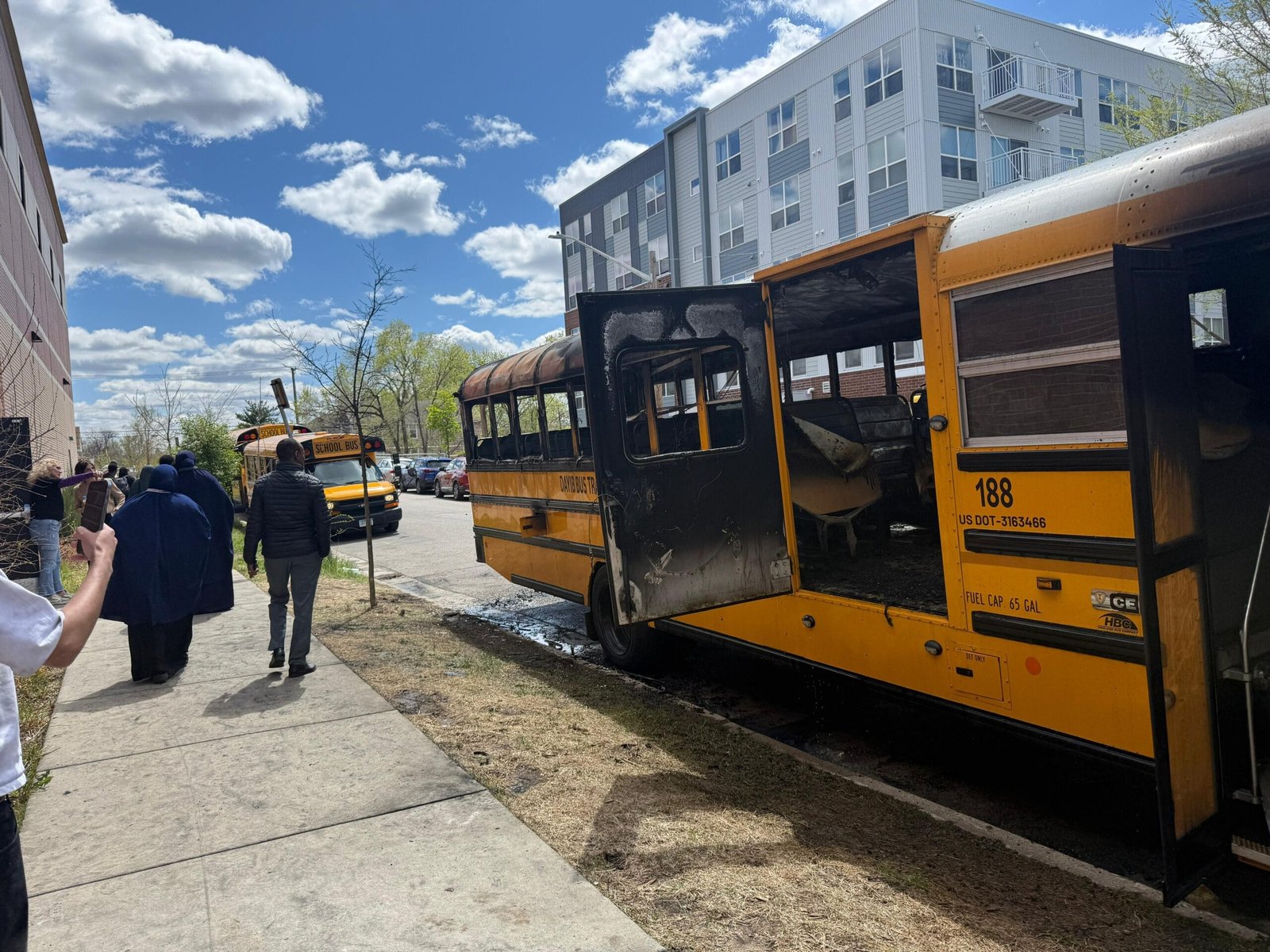
A fire on a school bus at AIM Academy in South Minneapolis has raised alarms among nearby residents and community officials, as pictures revealed a severely damaged vehicle with burned interiors, broken windows, and apparent signs of fire damage.
Images from the location depict the back of the bus charred, with wreckage spread across the roadside and rescue workers examining the destruction. Nearby buses remained undamaged, indicating that the incident was serious but contained.
Officials have not yet provided a complete statement regarding the fire’s cause or if foul play is suspected. At this moment, no injuries have been verified.
The event occurs during a period of increased tension in Minneapolis, especially in areas with significant immigrant and Muslim communities. In early 2026, the city faced major unrest after federal immigration actions and a deadly shooting involving an ICE agent, resulting in protests and widespread anxiety regarding safety and government presence.

Community advocates argue that events such as the AIM Academy bus fire should not be considered separately.
“This goes beyond just a bus,” remarked a local organizer. “It concerns a cycle of fear and insecurity that groups are currently facing.”
Throughout the United States, there has been a recorded increase in events aimed at Muslim communities and businesses owned by immigrants in the last ten years. Civil rights organizations, such as the Council on American-Islamic Relations, have indicated:
- Every year, numerous bias-related occurrences are reported, including vandalism and arson aimed at mosques.
- Heightened dangers facing Somali-operated enterprises, especially in Midwestern urban areas
- Increases in hate crimes during times of heated political discourse regarding immigration and national security.
Studies have consistently indicated that inflammatory political discussions, particularly regarding immigration enforcement and identity, can be linked to rises in actual harassment and violence.
The targeting or perceived targeting of educational infrastructure has a significant psychological effect. Schools are usually regarded as secure environments, and occurrences like this can increase worry among students, parents, and teachers.