
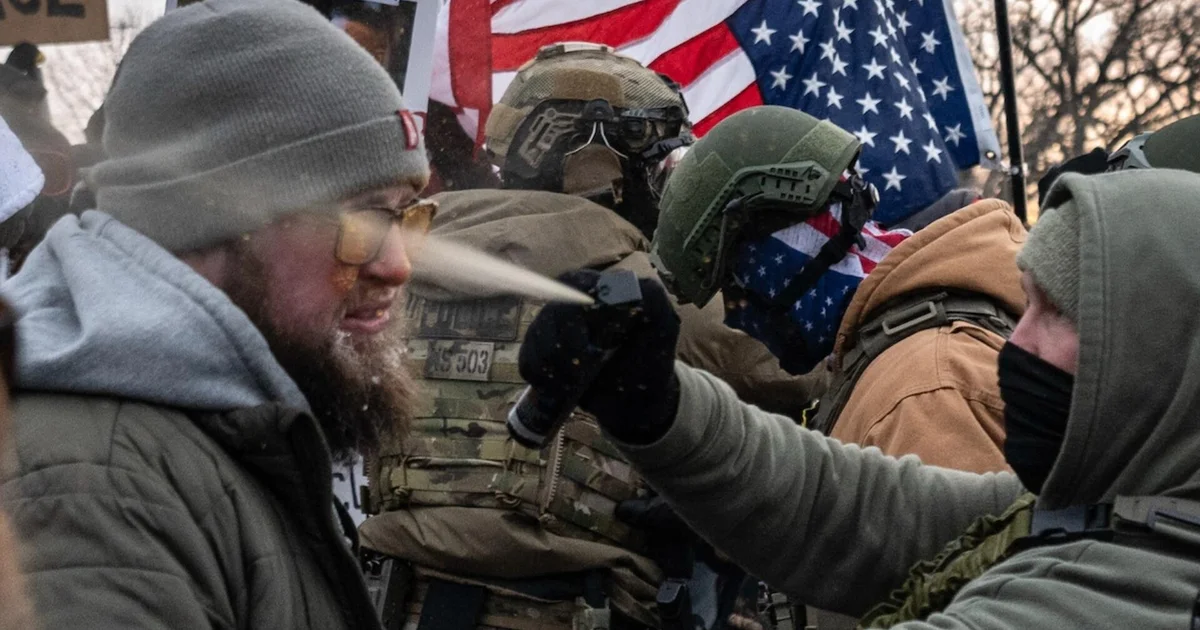
Minneapolis, Minnesota – In the latest development in the ongoing conflict over federal immigration enforcement and protests in the Twin Cities, the U.S. Department of Justice (DOJ) has filed a formal appeal of a judge’s court order that restricts how federal agents can interact with demonstrators, lawyers and court records show. (Reuters)
The order in question was issued last week by U.S. District Judge Katherine Menendez in Minnesota and was designed to protect the constitutional rights of peaceful protestors who have been demonstrating against federal immigration operations known as Operation Metro Surge. Under this injunction, federal officers including agents from Immigration and Customs Enforcement (ICE) and other federal agencies are prohibited from:
- Arresting or detaining peaceful protesters and observers unless there is reasonable suspicion of a crime,
- Using pepper spray, tear gas, or other non-lethal crowd control tools against those engaged in lawful demonstration,
- Stopping or detaining drivers and passengers who are simply observing or following enforcement operations without interfering. (Reuters)
The ruling was prompted in part by widespread unrest following the fatal shooting of 37-year-old Renée Nicole Good by an ICE agent during an enforcement action in Minneapolis on January 7, which set off weeks of demonstrations, clashes with federal officers, and legal challenges across Minnesota. (Reuters)
Why the DOJ Is Appealing
In a brief filed with the federal court, lawyers for the DOJ argued that the judge’s order illegally limits the tools that federal agents may lawfully use to carry out their duties. According to government attorneys, the restrictions could hinder the ability of federal officers to protect themselves and the public during enforcement operations, especially when protests have included confrontational conduct. (FOX 9 Minneapolis-St. Paul)
The appeal is expected to be reviewed by the U.S. Court of Appeals for the Eighth Circuit, where the DOJ will seek to have the restrictions either overturned or modified pending further litigation. (Spokesman-Review)
Legal Context: What the Judge Ruled
Judge Menendez’s order was prompted by a lawsuit filed on December 17, 2025, alleging that federal agents repeatedly violated the constitutional rights of protestors by employing aggressive tactics against people who were peacefully observing or opposing immigration enforcement actions. Civil liberties advocates said they documented unlawful arrests, forceful crowd control responses, and detentions of individuals who were not interfering with operations. (Wikipedia)
The court’s preliminary injunction responded directly to these allegations, specifying that:
- Agents may not retaliate against peaceful protestors,
- Agents may not use force without probable cause,
- Agents may not use vehicle stops as a pretext unless there is evidence someone is violating the law. (nationofchange.org)
Federal agents are still permitted to conduct their core immigration enforcement activities; the restrictions focus specifically on protests and related interactions. (nationofchange.org)
Public Debate and Response
The appeal highlights a broader tension in Minnesota between federal authorities and local communities. State and city leaders have sharply criticized the scope and tactics of federal immigration operations, claiming they have contributed to fear, disruption, and civil liberty infringements. Meanwhile, federal officials argue that their presence is justified and necessary to enforce immigration laws and protect public safety. (FOX 9 Minneapolis-St. Paul)
The controversy has drawn intense public attention and sparked heated debate over:
- The scope of federal power versus local autonomy,
- The right to protest and freedom of speech,
- Use of force by federal law enforcement,
- Constitutional protections during demonstrations.
These issues are now playing out in the courtroom, as legal challenges and appeals wind through the federal judicial system.
What Happens Next
The appeals process could take weeks to months. In the interim, the judge’s current restrictions remain in effect while the case is evaluated by higher courts. Analysts say the outcome will be influential not only for Minnesota but for how federal agents interact with protesters nationwide when enforcement operations coincide with public demonstrations.
Somali Media will continue to monitor this legal process and provide updates as they become available, with a focus on how these decisions affect civil liberties, law enforcement conduct, and community safety in Minnesota.