
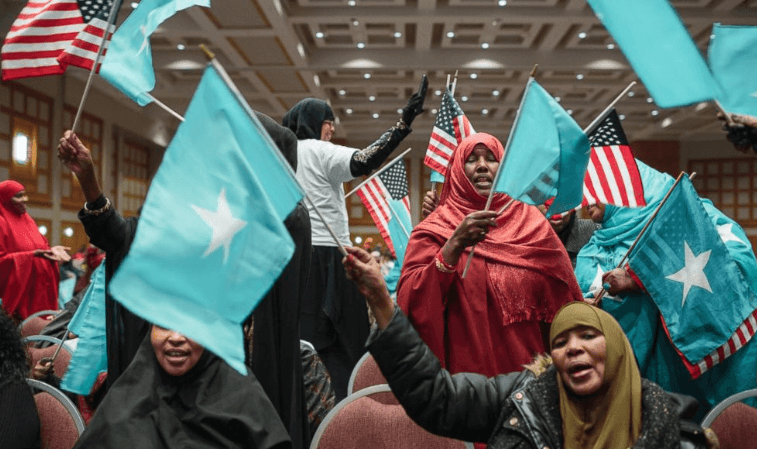
Minnesota is home to the largest Somali community in the United States. Over several decades, Somali Americans have built families, businesses, institutions, and political representation that are now an integral part of the state’s social and economic landscape. Yet in recent months, public discourse surrounding fraud investigations has increasingly painted this diverse and vibrant community with a single, damaging brush.
To understand why collective accusations are both inaccurate and harmful, it is essential to examine how Somali community life functions, what it contributes, and why individual criminal acts must never be confused with communal identity.
Why Minnesota Became Home to Somali Americans
Somalis began arriving in Minnesota in significant numbers in the early 1990s, fleeing civil war and state collapse. Minnesota’s refugee resettlement programs, employment opportunities, and existing social services made it a natural destination. Over time, family reunification and community networks strengthened this settlement, creating a stable base for integration and growth.
Today, Somali Americans are deeply rooted in Minnesota’s cities and towns, particularly Minneapolis–St. Paul and surrounding areas.
The Cultural Foundation of Somali Community Life
Somali society has historically relied on collective living and mutual assistance. In the absence of strong state institutions in Somalia, families and communities developed systems of shared responsibility to ensure survival and dignity.
This cultural framework continues in Minnesota and expresses itself through:
- Community fundraising for healthcare, education, and emergencies
- Support for new immigrants in housing and employment
- Collective entrepreneurship and business partnerships
- Mosques and community centers serving as social anchors
- Political mobilization to advocate for shared concerns
Such practices are not unusual in America. Many ethnic communities, from Jewish and Italian neighborhoods to Latino and Asian enclaves, have relied on similar structures to integrate and thrive.
Economic Contributions to Minnesota
Somali Americans contribute significantly to Minnesota’s economy:
- They own thousands of small businesses, including grocery stores, restaurants, trucking companies, daycare centers, and real estate ventures
- They are active in healthcare, education, logistics, retail, and public service
- They employ both Somalis and non-Somalis, contributing to local tax bases
- They revitalize neighborhoods and commercial corridors
Far from being a burden, Somali entrepreneurship has helped stabilize areas that previously faced economic decline.
Civic and Political Engagement
Somali Americans are increasingly visible in Minnesota’s civic life:
- Serving on school boards, city councils, and state legislatures
- Voting and participating in democratic processes
- Advocating for education, public safety, and social services
- Building bridges with other communities
This engagement reflects successful integration, not separation.
Fraud Allegations and the Problem of Collective Accusation
Recent fraud investigations involving misuse of public funds have brought justified scrutiny on specific individuals and organizations. Criminal behavior must be investigated and punished through the rule of law.
However, conflating these crimes with Somali culture or community life is legally and morally wrong. Fraud is not cultural; it is individual. No ethnic or immigrant community is immune from criminal activity, and no community should be defined by the actions of a few.
In the Minnesota case, individuals of different backgrounds were involved, including non-Somalis. Yet public narratives have disproportionately focused on Somali identity rather than documented facts.
The Harm of Stigmatization
When an entire community is accused:
- Law-abiding citizens face suspicion and discrimination
- Trust between communities and institutions erodes
- Young people feel alienated despite being born and raised in the U.S.
- Democratic values of equality and due process are weakened
History shows that collective blame has never strengthened American society, it has only deepened division.
Community Solidarity Is Not Criminality
Somali communal living, financial cooperation, political organization, and social support, is often misunderstood. These practices are legal, transparent, and protected by U.S. law. They reflect resilience, not wrongdoing.
Equating community solidarity with criminal conspiracy misunderstands both Somali culture and American pluralism.
Minnesota and the nation can move forward constructively by:
- Upholding individual accountability through the courts
- Rejecting ethnic generalizations in political discourse
- Promoting transparency in public funding programs
- Engaging Somali leaders as partners, not suspects
- Educating the public on immigrant community structures
Justice must be precise, not collective.
Somali Americans in Minnesota are not outsiders, they are neighbors, business owners, voters, and public servants. Their community structures reflect a long American tradition of immigrant self-help and civic participation.
To define an entire community by allegations against a few individuals is to ignore both facts and history. Minnesota’s strength lies in its diversity, and America’s promise rests on equal justice under the law.
Understanding Somali community life, rather than fearing it, is the first step toward fairness, unity, and truth.