

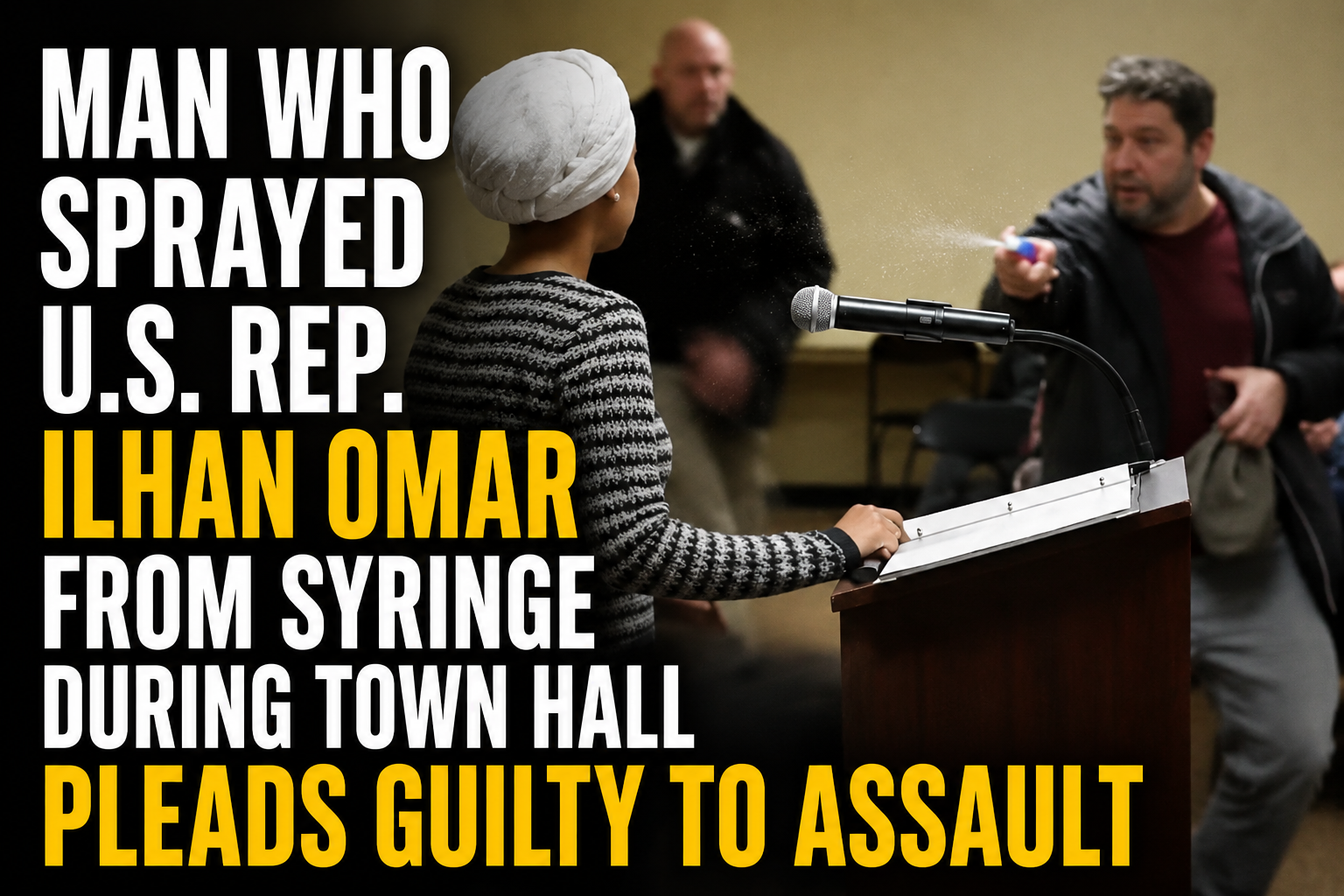
A man accused of spraying U.S. Congresswoman Ilhan Omar with vinegar during a tense town hall meeting in Minneapolis earlier this year has pleaded guilty to federal assault charges.
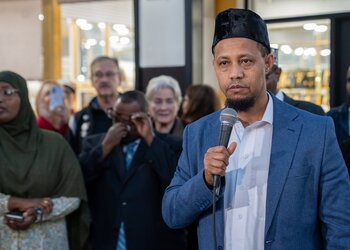
According to court proceedings Thursday, 55-year-old Anthony Kazmierczak admitted to assaulting the Minnesota congresswoman during the January 27 town hall event, an incident that shocked many across Minnesota’s Somali community and intensified concerns about rising political hostility and anti-immigrant rhetoric in the United States.
Kazmierczak is now awaiting sentencing.
Attack Happened During Heated Immigration Debate
The assault occurred during a public town hall meeting in Minneapolis at a time when tensions were already running high over aggressive federal immigration enforcement operations.
Prosecutors say Kazmierczak jumped from the audience after Omar criticized then-Homeland Security Secretary Kristi Noem and called for her removal. He then sprayed liquid from a syringe toward Omar while shouting political remarks, including accusations that she was “splitting Minnesota apart.”
Security officers quickly tackled and arrested him at the scene.
Authorities later confirmed the substance was a mixture of water and apple cider vinegar. Omar was not physically injured and continued the town hall after the disruption.
During Thursday’s hearing, Kazmierczak described his memory of the incident as “fuzzy,” telling the judge he “didn’t want anybody to think she was in danger.”
Somali Community Alarmed by Rising Threats
The incident triggered widespread fear and outrage among Somali-Americans in Minnesota, many of whom viewed the attack as part of a broader atmosphere of hostility directed toward immigrants, Muslims, and Somali public figures.
Omar, who came to the United States as a refugee from Somalia and later became one of the first Somali-American members of Congress, has long faced political attacks and inflammatory rhetoric.
In recent years, she has repeatedly been targeted by U.S. President Donald Trump, who previously told Omar to “go back” to Somalia and recently referred to Somalis as “garbage” during escalating political battles over immigration policy.
Following the January attack, Trump also controversially suggested without evidence that Omar may have staged the incident herself.
The attack came during a period of heightened anxiety in Minnesota’s Somali community amid federal immigration crackdowns and debates over the future of protections such as Temporary Protected Status (TPS) for Somali immigrants.
Troubling History Emerges
Court records revealed disturbing details about Kazmierczak’s past behavior and political views.
Federal documents say he had previously told an associate years ago that “somebody should kill” Omar. Investigators also found social media posts in which he expressed strong support for Trump and harsh criticism of Democrats.
During Thursday’s hearing, Kazmierczak told the court he suffers from Parkinson’s disease, ADHD, and post-traumatic stress-related conditions. His legal team had earlier argued he lacked proper access to medication after his arrest.
Minnesota court records also show a lengthy history of legal and financial troubles, including DUI arrests, traffic offenses, bankruptcy filings, and a past felony auto theft conviction.
Growing Concerns Over Political Violence
The Omar assault has renewed national concerns over growing threats against elected officials and politically motivated violence in the United States.
According to U.S. Capitol Police data, threats against members of Congress have sharply increased in recent years, especially after the January 6 Capitol riot.
For many Somali Minnesotans, however, the attack carried an even deeper meaning — raising fears about the normalization of anti-Somali rhetoric and the dangers faced by visible Muslim and immigrant leaders in American public life.