

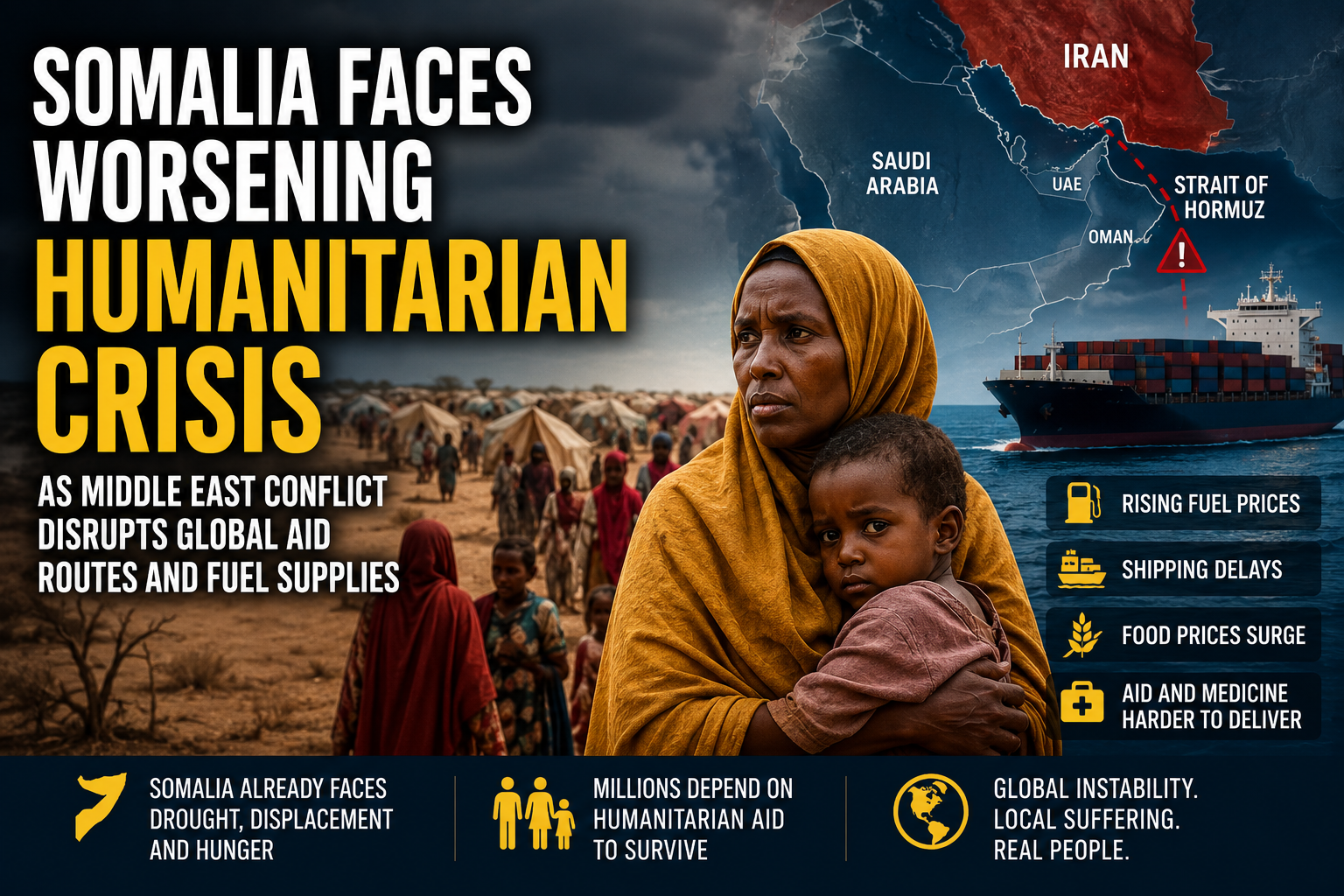
As war tensions involving Iran continue to shake global markets and shipping routes, Somalia is once again paying the price for a crisis it did not create.
A recent report highlights how the escalating conflict in the Middle East particularly disruptions around the Strait of Hormuz is worsening Somalia’s already fragile humanitarian situation.
For many Somali families, both inside Somalia and across the diaspora in places like Minnesota, the developments are alarming.
Why the Strait of Hormuz Matters to Somalia
The Strait of Hormuz is one of the world’s most important oil and shipping routes. A large percentage of global fuel and commercial goods pass through the narrow waterway connecting the Persian Gulf to international markets.
As tensions involving Iran have intensified, shipping through the region has slowed dramatically due to security fears, attacks on vessels, and rising insurance and fuel costs.
While the conflict may seem geographically distant from Somalia, the economic consequences are immediate.
Somalia depends heavily on imported fuel, food, medicine, and humanitarian aid. When shipping costs rise globally, the effects quickly hit ordinary Somali households through higher food prices, fuel shortages, and delayed aid deliveries.
Humanitarian agencies warn that emergency nutrition supplies and medical aid are becoming more expensive and harder to transport into Somalia.
A Country Already Facing Crisis
Somalia was already struggling with overlapping humanitarian emergencies before the latest global disruptions.
Millions remain vulnerable due to drought, displacement, armed conflict, inflation, and food insecurity. Entire communities continue to depend on humanitarian assistance for survival.
Now, rising transportation costs and delays in global shipping are threatening to make conditions even worse.
Aid groups cited in international reporting say the cost of importing life-saving nutrition treatments for malnourished children has sharply increased since the conflict escalated.
At the same time, soaring fuel prices are affecting nearly every aspect of life inside Somalia – from transportation and electricity to food distribution and clean water access.
Ripple Effects Felt in Minnesota
Minnesota’s Somali community is watching the crisis closely.
Many Somali-American families remain deeply connected to relatives back home through remittances, humanitarian support, and constant communication.
As prices rise in Somalia, diaspora families often feel pressure to send more money to struggling relatives already facing difficult economic conditions.
Community leaders say global instability is increasingly exposing how vulnerable countries like Somalia remain to international political and economic shocks.
A war thousands of miles away can still affect whether Somali families can afford bread, fuel, medicine, or basic necessities.
Humanitarian Agencies Sound the Alarm
International aid organizations are now calling for protected humanitarian shipping corridors to ensure food, medicine, and emergency supplies can continue reaching vulnerable populations.
The concern is that prolonged instability in the Gulf region could trigger even deeper humanitarian suffering across East Africa, especially in countries already dealing with fragile economies and climate-related crises.
For Somalia, the danger is not only political instability or armed conflict inside the country itself – but also the growing impact of global crises that continue to push vulnerable populations closer to catastrophe.
As the world focuses on geopolitical tensions and military escalation, humanitarian organizations warn that ordinary civilians – including millions of Somalis – may once again bear the heaviest burden.