


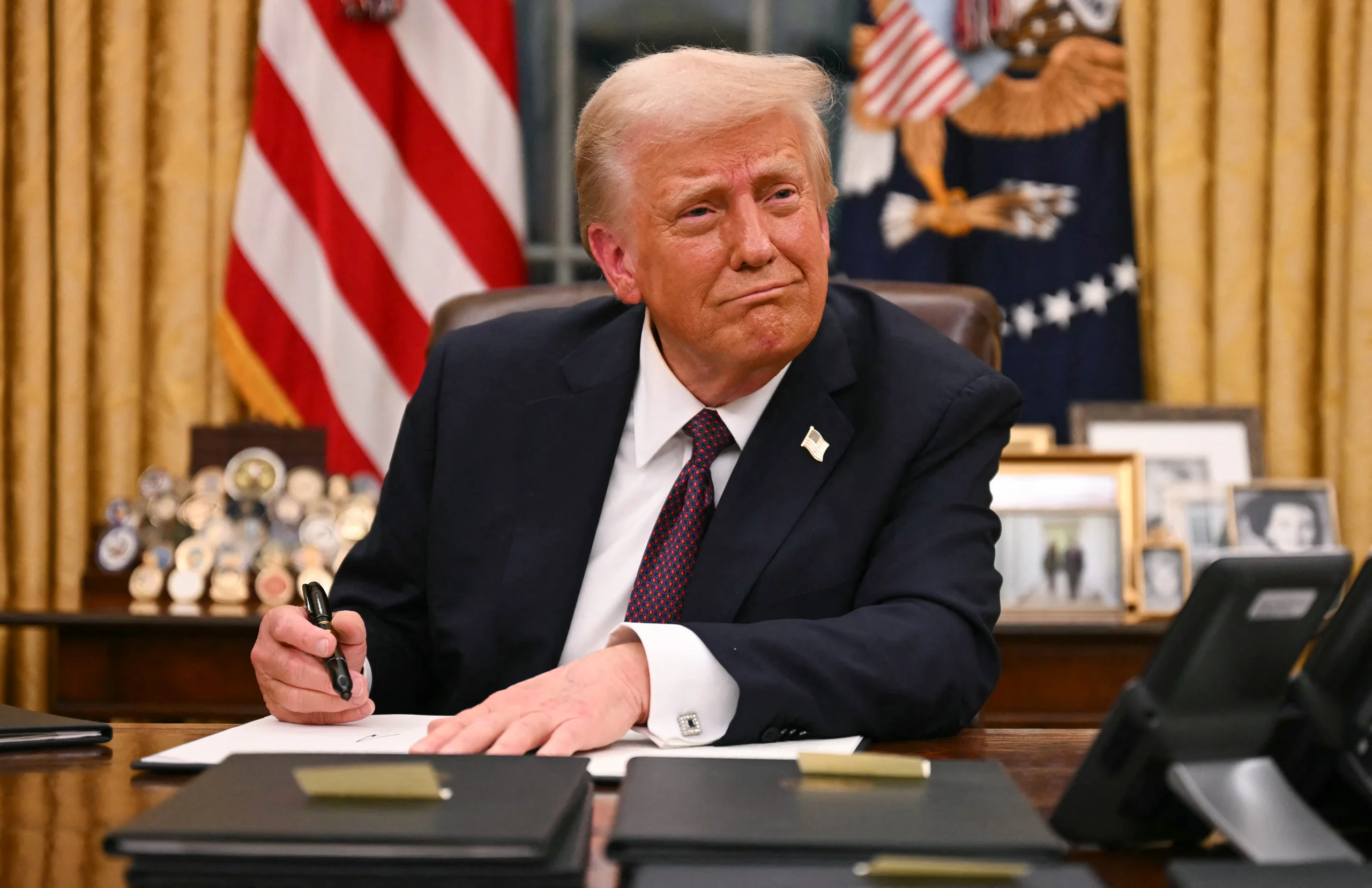
The Trump administration is restoring portions of U.S. funding for global health and humanitarian programs after months of disruption caused by its overhaul of American foreign assistance, according to a report by The New York Times.
The move represents a significant adjustment to President Donald Trump’s effort to dramatically reshape the way the United States provides aid overseas.
The administration has argued that American foreign assistance should serve U.S. interests more directly, reduce waste and encourage countries receiving aid to take greater responsibility for their own health systems.
But the disruption to long-running programs has raised concerns among health organizations and governments that depend on American support to fight HIV, malaria, tuberculosis and other diseases.
Some programs are coming back
The restored funding includes support for organizations involved in major global health and humanitarian efforts, including UNICEF, Gavi and the World Food Programme, according to the New York Times.
The changes come after the administration’s decision to dismantle much of the traditional U.S. foreign-aid structure and move international health assistance under the State Department.
The policy shift has already had consequences for organizations around the world that depended on predictable American funding.
The Trump administration’s broader foreign-aid review began soon after Trump returned to the White House, with an executive order pausing U.S. foreign development assistance for review.
The administration subsequently moved to restructure the aid system and reduce the role previously played by USAID.
From USAID to an “America First” approach
The administration’s new approach is built around what it calls an America First global health strategy.
Instead of maintaining the previous system of large-scale assistance programs, Washington has been negotiating bilateral health agreements with individual countries.
The strategy is intended to place greater emphasis on measurable health outcomes, country-level responsibility and U.S. national interests.
The State Department has already reached health agreements with numerous countries, including several in Africa. The new arrangements generally provide substantial U.S. support while asking recipient governments to increase their own contributions over time.
The approach represents a fundamental change from the model that dominated U.S. international health assistance for decades.
Why the changes matter in Africa
The United States has historically been one of the world’s largest providers of global health assistance.
American funding has supported HIV treatment, malaria prevention, tuberculosis programs, maternal and child health, disease surveillance and emergency responses across Africa.
The disruption therefore created uncertainty for health ministries, international organizations and nongovernmental groups that had built programs around U.S. funding.
Médecins Sans Frontières has warned that the changes to U.S. foreign assistance have already disrupted health and humanitarian programs, with consequences including clinics closing and medical supplies being delayed.
The stakes are particularly high in countries where governments have limited resources to immediately replace foreign assistance.
A policy shift, not simply a return to the old system
The restoration of selected programs does not mean the United States is returning to its previous foreign-aid model.
The administration continues to pursue a smaller and more directly controlled aid system.
The State Department’s new strategy emphasizes bilateral agreements and a gradual transition toward countries financing more of their own health systems.
That means organizations receiving U.S. assistance may face different conditions in the future.
Programs that once depended on long-term American financing could increasingly be expected to demonstrate measurable results while governments take on a larger share of the cost.
The fight against HIV remains a major test
One of the biggest questions surrounding the new policy is the future of America’s global HIV programs.
The United States has played a central role in the international response to HIV through the President’s Emergency Plan for AIDS Relief, commonly known as PEPFAR.
PEPFAR has become one of the most significant U.S. international health initiatives, providing treatment and prevention services across heavily affected countries.
The administration’s restructuring has raised concerns about what happens when countries are expected to assume responsibility for programs that have historically depended heavily on American funding.
The new approach calls for countries to move toward greater self-reliance, while the United States continues to fund essential commodities and frontline health workers during the transition.
The Ebola response shows the changing relationship
The administration’s recent response to the Ebola outbreak in the Democratic Republic of Congo also illustrates the changing approach.
The United States announced an additional $242 million for the Ebola response in eastern Congo, bringing its total commitment to $512 million.
The funding will support health facilities, medical supplies and disease-control activities during the outbreak.
The decision demonstrates that despite the administration’s efforts to reduce and restructure foreign assistance, Washington remains prepared to provide substantial funding during major international health emergencies.
Supporters say the old system was unsustainable
Supporters of Trump’s approach argue that the United States cannot continue carrying such a large share of the cost of global health programs indefinitely.
They say recipient countries should gradually increase domestic health spending and develop systems capable of operating without permanent dependence on American assistance.
The administration also argues that direct bilateral agreements give Washington greater control over how American taxpayer dollars are spent.
Critics, however, warn that rapid cuts and restructuring can undermine programs that took years to build.
They argue that diseases do not stop at national borders and that weakening health systems abroad can ultimately create risks for Americans as well.
The challenge of finding the balance
The latest restoration of funding highlights the difficult balance facing the Trump administration.
Washington wants to reduce America’s long-term financial commitments abroad while protecting programs that address immediate global health threats.
That balance will be particularly important in Africa, where U.S. assistance has helped build healthcare infrastructure and disease-control systems over several decades.
The question is whether the new model can maintain those gains while requiring recipient countries to contribute more of their own resources.
What comes next
The restoration of selected health and humanitarian programs suggests that the Trump administration’s foreign-aid overhaul is entering a more complicated phase.
The initial disruption was followed by a restructuring of the system. Now, some programs are receiving funding again while others face a fundamentally different relationship with Washington.
For countries that depend on American assistance, the message is clear: U.S. aid is not disappearing altogether, but the way it is delivered is changing.
The era of large, broadly structured American foreign assistance is giving way to a more selective system built around bilateral agreements, measurable outcomes and the administration’s “America First” priorities.
Whether that produces a more efficient global health system or leaves vulnerable populations exposed will ultimately depend on how the transition is managed.
For millions of people receiving treatment, vaccines and other essential health services, the most important question is not how Washington restructures its aid agencies.
It is whether the medicines, healthcare workers and programs they depend on will still be there when they need them.


