


Puntland security forces have taken control of a military camp in the northern part of Galkayo after intense fighting with forces aligned with Somalia’s federal government, marking a sharp escalation in the increasingly strained relationship between Puntland and Mogadishu.
The clash on Wednesday is the latest confrontation in a widening political and security dispute between Somalia’s federal authorities and regional administrations opposed to President Hassan Sheikh Mohamud’s push to strengthen central government authority.
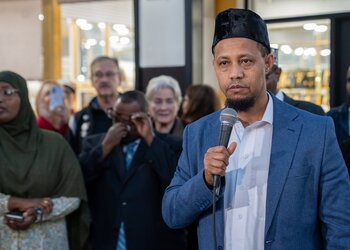
Puntland President Said Abdullahi Deni described the operation as a planned security action, saying his administration was responding to what it considers attempts to undermine Puntland’s security and stability.
Puntland says it targeted a federal military buildup
According to Deni, the camp near Galkayo airport had been used by federal authorities to transport weapons, military equipment and troops.
He accused the federal government of attempting to undermine Puntland, an allegation that Mogadishu had not immediately responded to when the fighting was reported.
Puntland authorities said their forces successfully completed the operation and arrested more than 100 people.
They also reported seizing weapons, ammunition, vehicles and other military equipment from the facility.
The claims could not immediately be independently verified.
Fighting lasted more than an hour
The confrontation involved heavily armed Puntland forces supported by military vehicles.
Residents told AFP that they heard mortar fire during the fighting, with some rounds landing in residential areas.
Casualties were reported, although no reliable figure was immediately available.
Residents also said the federal-aligned forces withdrew toward southern Galkayo after Puntland forces took control of the camp.
The federal government and commanders of the opposing forces had not issued an immediate public response to Puntland’s claims.
Galkayo: A city divided
The significance of the confrontation goes beyond the military camp.
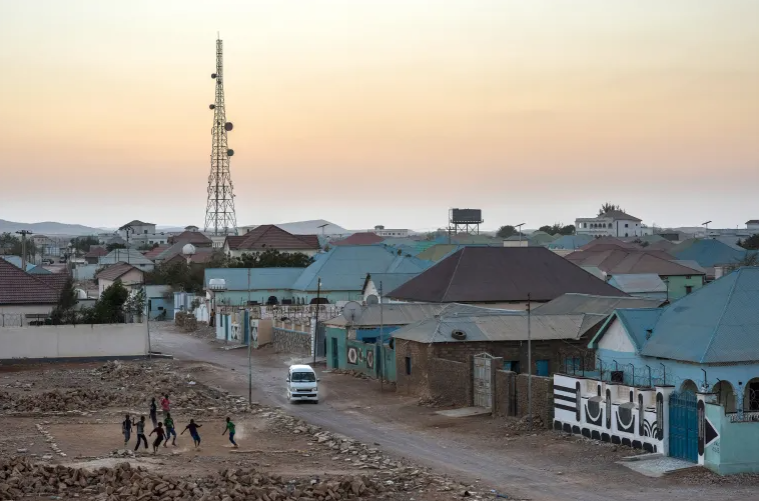
Galkayo is one of Somalia’s strategically important cities and has historically been divided between Puntland-administered territory in the north and areas under the administration of Galmudug in the south.
That makes the presence and movement of federal-aligned forces in the city particularly sensitive.
Any military confrontation in Galkayo risks escalating tensions not only between Puntland and Mogadishu but also along the political and administrative fault lines that divide Somalia.
For residents, the immediate concern is security.
Mortar fire reaching residential areas during Wednesday’s fighting underscored the danger that political disputes between governments and security forces can quickly become a threat to civilians.
Another front in Somalia’s political struggle
The Galkayo confrontation comes amid a broader political dispute over the future direction of Somalia’s federal system.
President Hassan Sheikh Mohamud’s administration has been pursuing constitutional and political reforms that critics say could increase the power of the central government.
Puntland has emerged as one of the strongest opponents of Mogadishu’s approach.
Deni has repeatedly criticized what Puntland sees as efforts to centralize authority at the expense of Somalia’s federal member states.
Al Jazeera reported that the political tensions are partly linked to constitutional changes approved in March, which opponents have characterized as a move by the president to consolidate power.
Puntland’s position
Puntland has long maintained a significant degree of autonomy while remaining part of the Somali federal system.
Its leadership argues that federalism requires meaningful powers for regional administrations and that major constitutional or political changes should involve broad agreement among Somalia’s federal states.
Mogadishu, meanwhile, has argued for stronger national institutions and a more unified federal government.
The disagreement is no longer confined to political statements.
In recent months, tensions between federal forces and regional authorities have repeatedly spilled into security confrontations.
That raises the stakes of the Galkayo incident.
A dangerous pattern
The latest clash follows other confrontations between Somalia’s federal government and regional administrations.
Al Jazeera noted that federal troops attacked and removed the leader of South West State in March, while fighting also broke out between federal forces and Jubaland forces last year.
These episodes point to a larger challenge confronting Somalia: building a functioning federal system while simultaneously establishing a strong national government.
The disagreement over who controls security forces is particularly sensitive.
A country still confronting armed groups such as al-Shabaab and Islamic State-affiliated militants cannot afford prolonged internal divisions among forces that are supposed to contribute to national security.
The bigger question: Who controls Somalia’s security forces?
At the heart of the dispute is a fundamental question about Somalia’s federal structure.
Who should control armed forces operating inside the federal member states?
How much authority should Mogadishu have over regional security institutions?
And how should disagreements over constitutional reforms be resolved without triggering armed confrontation?
The Galkayo fighting demonstrates the consequences when those questions remain unresolved.
For Somalia’s international partners, the latest confrontation is also likely to be concerning.
International support for Somalia’s security sector is aimed primarily at strengthening the country’s ability to confront armed groups and stabilize the country.
Political divisions that turn government-aligned forces against regional forces risk diverting attention and resources away from that objective.
More than a military confrontation
The seizure of the Galkayo camp should therefore not be viewed simply as another battlefield development.
It is a symptom of a deeper political disagreement over the distribution of power in Somalia.
Puntland wants to preserve its autonomy within a federal system.
Mogadishu wants stronger national institutions and greater central authority.
Neither objective is inherently incompatible with a functioning federal state.
But achieving both requires political compromise.
Without it, each new deployment of troops, seizure of a military base or constitutional dispute carries the possibility of another confrontation.
Somalia faces a choice
The fighting in Galkayo has ended for now, but the political dispute behind it remains unresolved.
Puntland has demonstrated that it is prepared to use its security forces to defend what it considers its territory and political authority.
The federal government, meanwhile, faces the challenge of maintaining national authority without pushing regional administrations further away from Mogadishu.
For ordinary Somalis, the hope is that political disagreements will be settled around negotiating tables rather than through armed confrontations.
Somalia has spent decades struggling with insecurity and political fragmentation.
The country can ill afford to see divisions within its own federal system become another source of conflict.
The Galkayo confrontation is therefore a warning: Somalia’s greatest challenge may not only be defeating armed groups, but also finding a political settlement that keeps its own security forces from turning against one another.