


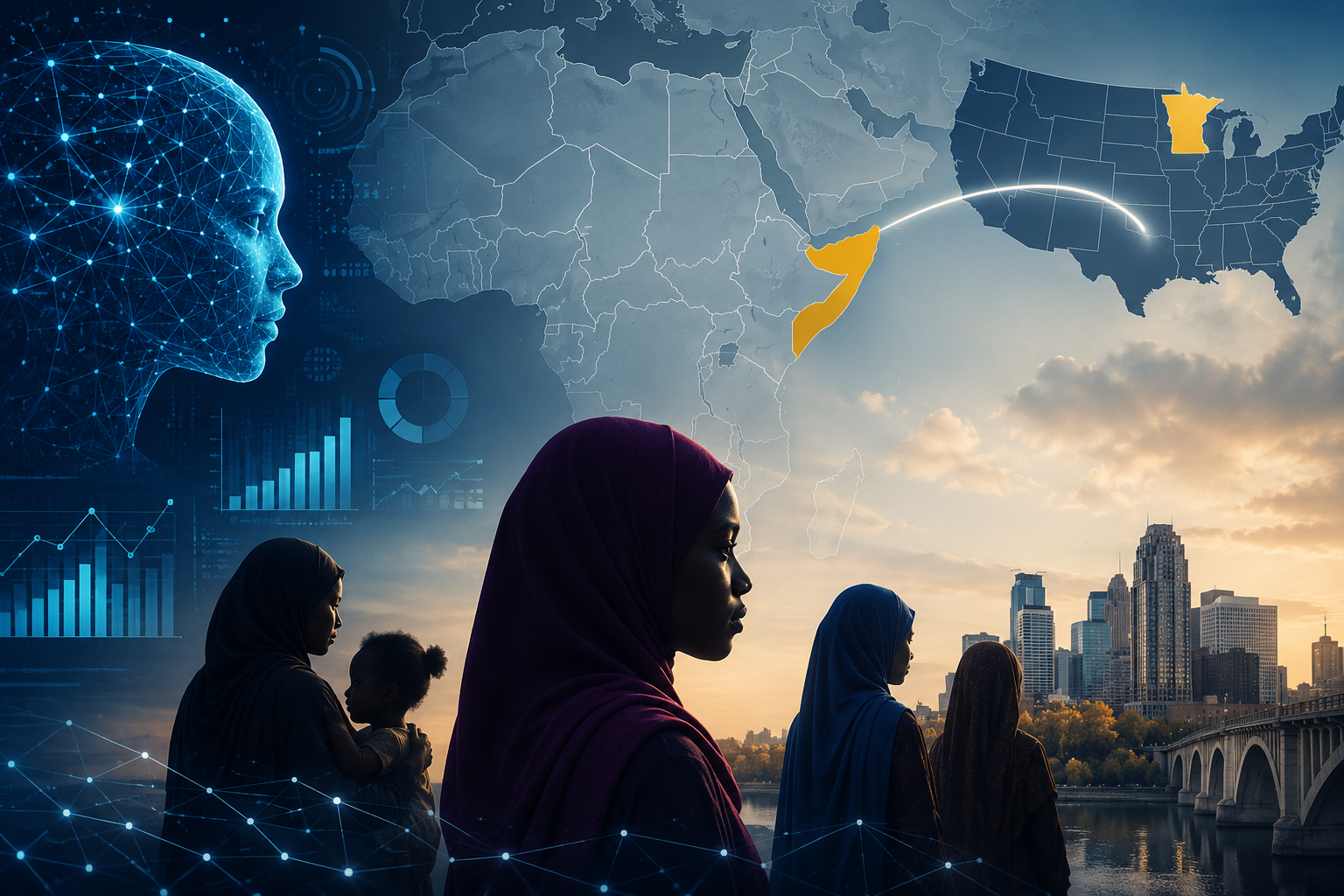
A newly published study in the journal Scientific Reports is drawing international attention for using supervised machine learning to classify gender-based violence (GBV) cases in Somalia, offering new insights into how artificial intelligence can support humanitarian response and violence prevention efforts. The research compares different oversampling techniques to improve the accuracy of identifying patterns of gender-based violence in complex and imbalanced datasets.
For Minnesota readers, this research carries both global and local significance.
Minnesota is home to one of the largest Somali communities in the United States, particularly in the Minneapolis and Saint Paul metropolitan areas. Advances in research related to Somalia’s public health and social challenges often resonate deeply with families, advocacy groups, and community organizations across the state.
What the Study Examined
The study focused on how machine learning algorithms can improve the classification and prediction of gender-based violence cases in Somalia.
Researchers tested multiple supervised machine learning models and compared various oversampling techniques, data-balancing methods used when some categories in a dataset are underrepresented.
This matters because gender-based violence data is often highly imbalanced, with some forms of violence reported far less frequently than others. Without balancing the data, predictive systems can miss critical warning patterns. The research shows that using advanced computational methods can significantly improve classification accuracy and support better intervention strategies.
Why This Matters for Somalia
Gender-based violence remains a serious challenge across many parts of Somalia due to a combination of:
- Conflict-related instability
- Displacement of families
- Limited reporting mechanisms
- Cultural stigma surrounding abuse reporting
- Gaps in access to survivor support services
By using artificial intelligence to identify patterns more effectively, researchers hope to help humanitarian agencies and policymakers better target prevention programs and allocate resources where they are most needed.
The goal is not to replace human intervention, but to strengthen decision-making with better evidence.
Why Minnesota Readers Should Care
Minnesota’s Somali-American community has deep family, cultural, and humanitarian ties to Somalia.
Research like this matters here because many local organizations in Minnesota work directly on:
- Refugee support services
- Women’s advocacy initiatives
- Mental health services
- Domestic violence prevention programs
- International humanitarian outreach
The findings may also inform local academic institutions, public health researchers, and nonprofit leaders exploring how technology can be applied to address violence prevention in immigrant and refugee communities.
Institutions such as the University of Minnesota and community-based organizations focused on Somali health equity may find practical applications in these emerging machine learning approaches.
The Growing Role of AI in Public Health
This study reflects a broader global trend: artificial intelligence is increasingly being used to address social and public health challenges.
Machine learning tools are now helping researchers analyze patterns related to:
- Domestic violence prevention
- Public health risks
- Mental health prediction
- Refugee protection systems
- Crisis intervention planning
When used responsibly, these technologies can improve early detection and support evidence-based solutions.
For Minnesota readers, this study is a reminder that innovation happening across the globe can have local relevance.
As Minnesota continues to serve as a center of Somali-American life, research that improves safety, health, and wellbeing in Somalia also strengthens conversations happening here at home.
The intersection of technology, public health, and social justice will continue shaping how communities respond to gender-based violence, both internationally and in Minnesota.
This new research offers a promising example of how data-driven solutions can support more effective protection for vulnerable populations worldwide.