

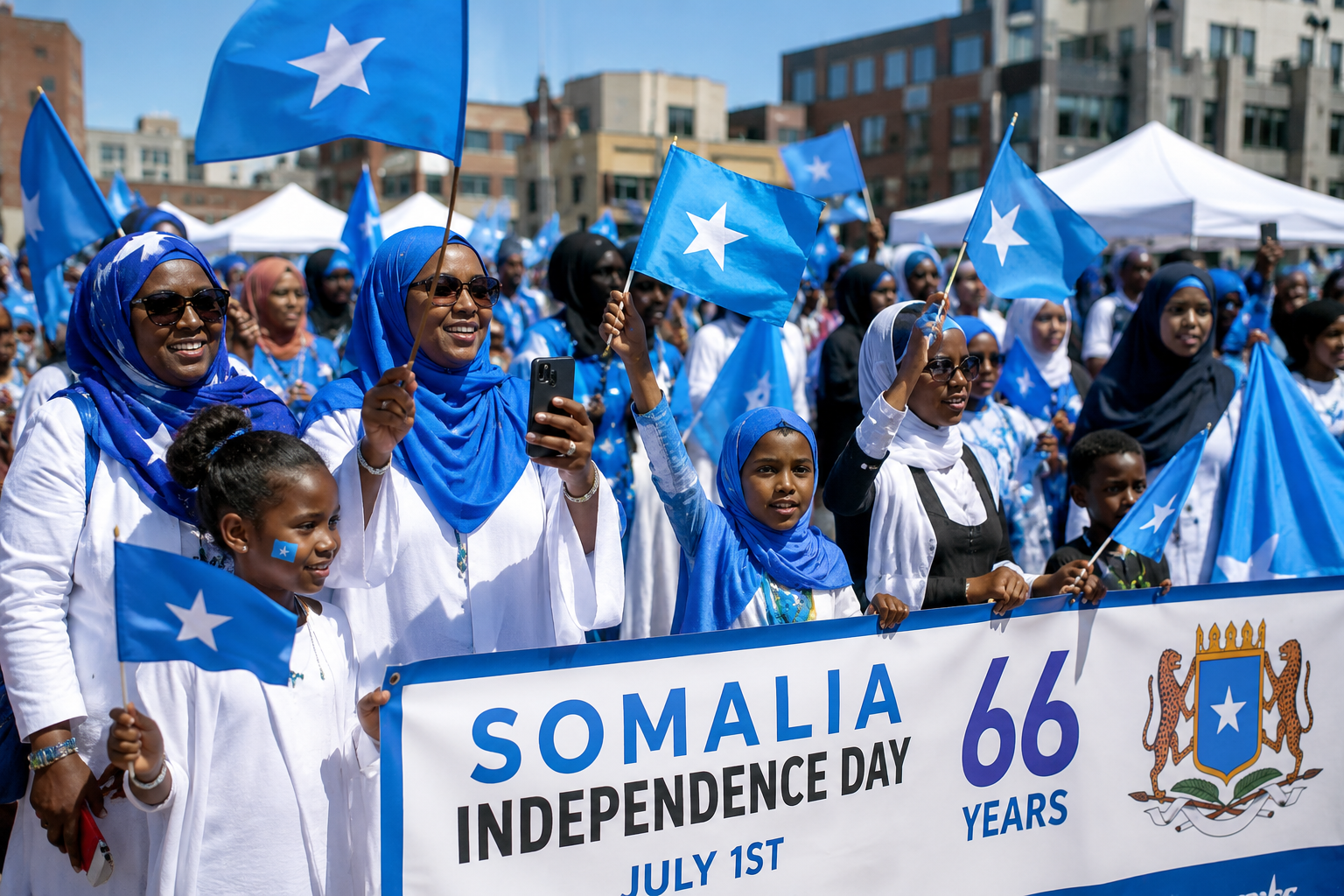
ROCHESTER, N.Y. — The Somali community in Rochester came together this week to celebrate the 66th anniversary of Somalia’s independence, transforming downtown’s Parcel 5 into a vibrant display of culture, patriotism and community spirit.
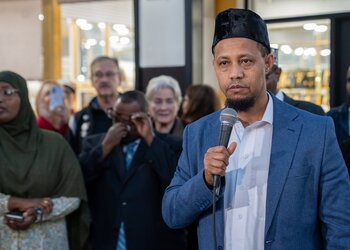
The celebration, held on July 1, featured traditional Somali music, poetry, cultural performances, food vendors, lawn games and speeches reflecting on Somalia’s history and the resilience of its people. Families dressed in blue and white—the colors of the Somali flag—as children, elders and community leaders joined in singing the national anthem and commemorating the birth of the Somali Republic.
Somalia’s Independence Day marks the historic union of the former British Somaliland and the Italian-administered Trust Territory of Somaliland on July 1, 1960, creating the Somali Republic after decades of colonial rule.
For many attendees, the event represented more than a historical remembrance—it was a celebration of identity and belonging.
Community members described the gathering as one of the largest public recognitions of Somali heritage in Rochester’s history. Local organizers said the event highlighted the growing visibility and contributions of Somali Americans in the city while providing younger generations an opportunity to connect with their cultural roots.
The City of Rochester also joined the celebration by illuminating prominent landmarks in blue in honor of Somali Independence Day, a gesture welcomed by community leaders as a sign of recognition and inclusion.
The festivities come at a time when Somali communities across the United States are placing renewed emphasis on cultural pride and civic engagement. Similar Independence Day celebrations were held in several American cities, bringing together thousands of Somali Americans to celebrate both their heritage and their contributions to their adopted communities.
As music echoed through downtown Rochester and Somali flags waved proudly overhead, the event served as a reminder that, 66 years after independence, the Somali spirit continues to thrive far beyond the Horn of Africa—strengthened by a global diaspora committed to preserving its history, culture and unity.